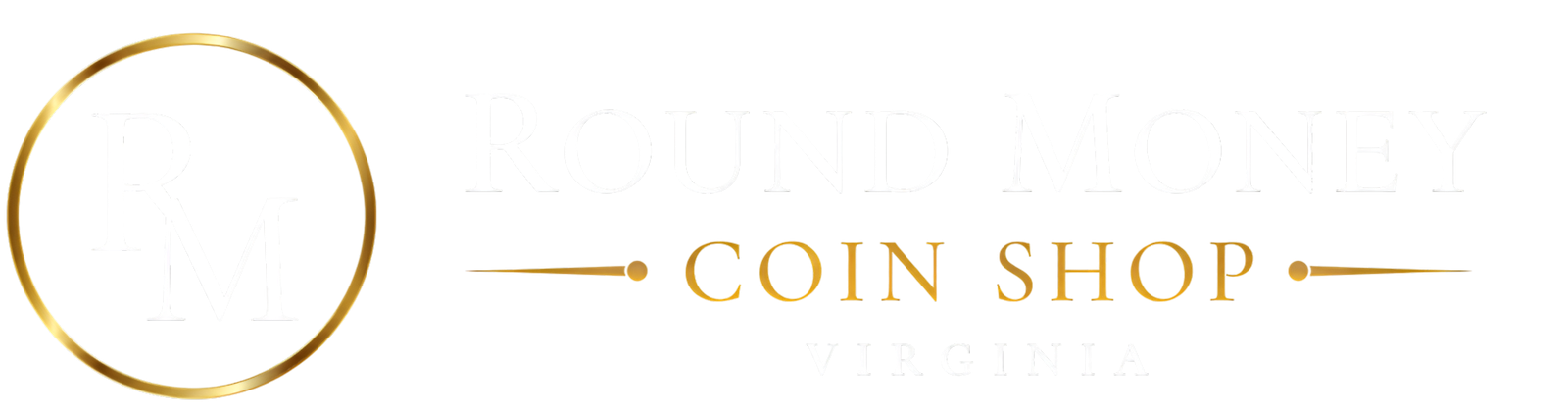
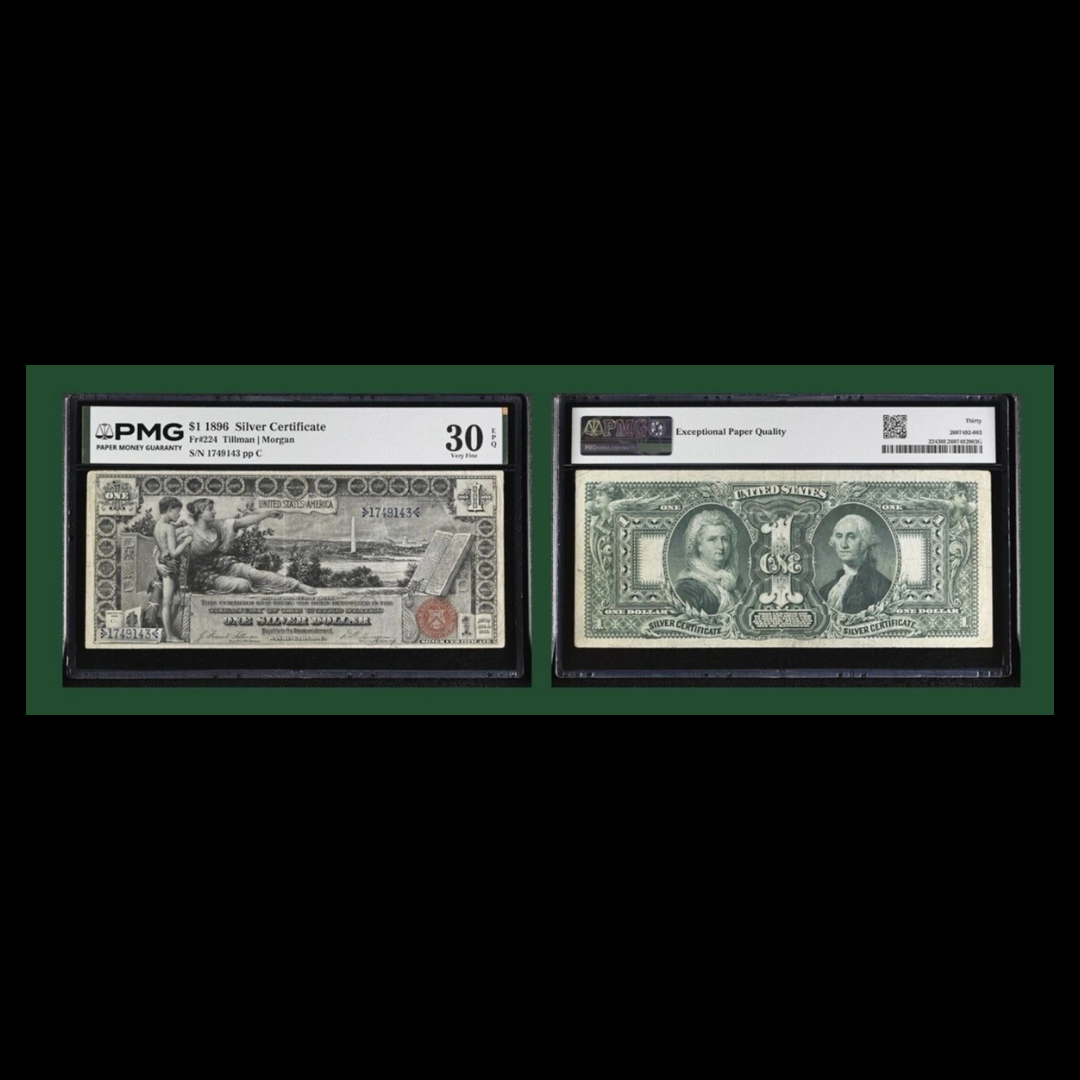
An iconic 1896 $1 Educational Series Silver Certificate celebrated for its elaborate allegorical artwork and considered one of the most beautiful designs in U.S. currency.
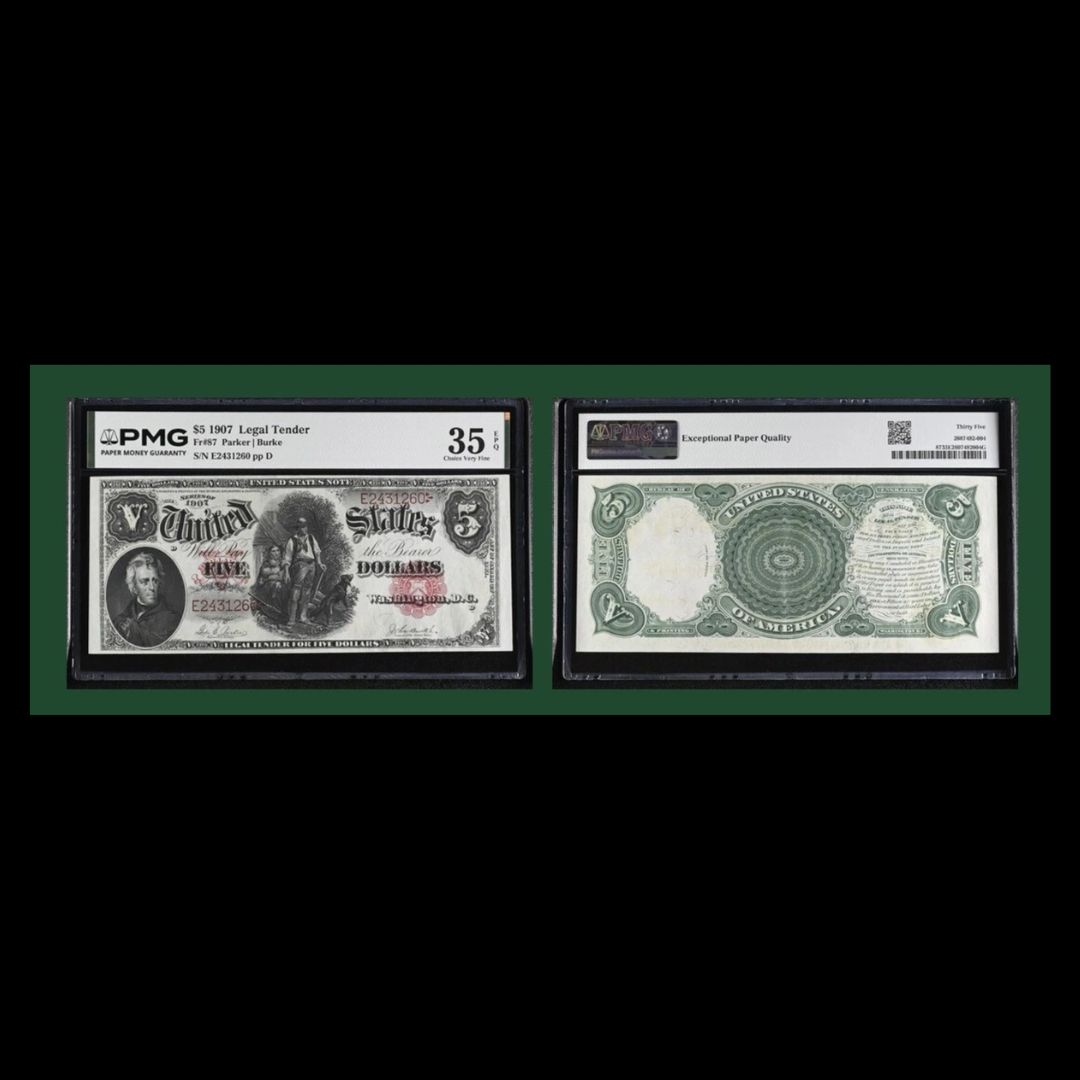
A classic 1907 $5 Legal Tender Note featuring the famous “Woodchopper” vignette, one of the most recognizable designs among large-size U.S. notes.
1901 $10 Legal Tender “Bison Note” – PMG 30
The legendary 1901 $10 “Bison Note,” featuring an American bison at center with portraits of explorers Lewis and Clark, and one of the most sought-after large-size U.S. currency designs.
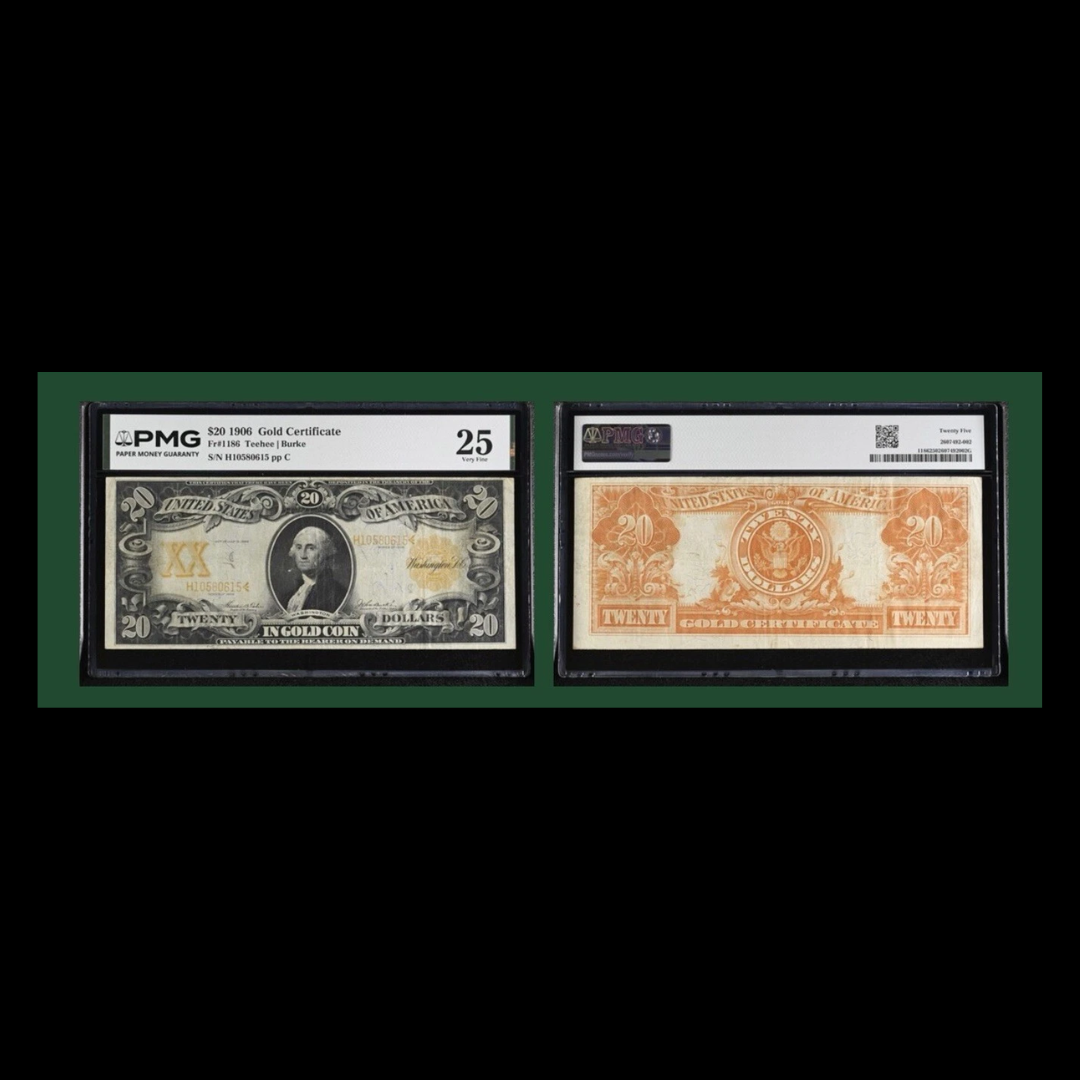
1906 $20 Gold Certificate – PMG 25
A striking 1906 $20 Gold Certificate featuring George Washington and the distinctive golden-orange reverse characteristic of early U.S. Gold Certificates.
The value of paper currency depends on its type, denomination, issuing bank, series, signatures, serial number, rarity and condition. Printing errors and historical significance can also add value. An old date by itself does not always make a note rare.
Are bills with unusual serial numbers collectible?
Yes. Collectors may pay premiums for certain “fancy” serial numbers, including very low numbers, solid numbers, repeaters, radars, ladders and serial numbers with meaningful patterns. The note’s condition and the strength of the pattern both influence its value.
Do you purchase entire currency collections?
Yes, we buy both individual notes and complete collections of all sizes.
What affects the value of a banknote?
Factors include condition, rarity, serial numbers, age, printing errors, and market demand.
Does writing or a bank stamp make a note worthless?
Not always. Writing, stains, tears and stamps usually affect the grade and value, but a rare note may still be collectible. On some historic notes, period signatures or stamps may even be part of the note’s story and should not be removed.
How should I store collectible paper money?
Store currency flat in archival-quality, acid-free and PVC-free sleeves. Keep it away from direct sunlight, humidity and extreme temperatures. Handle notes as little as possible and never laminate collectible currency.